
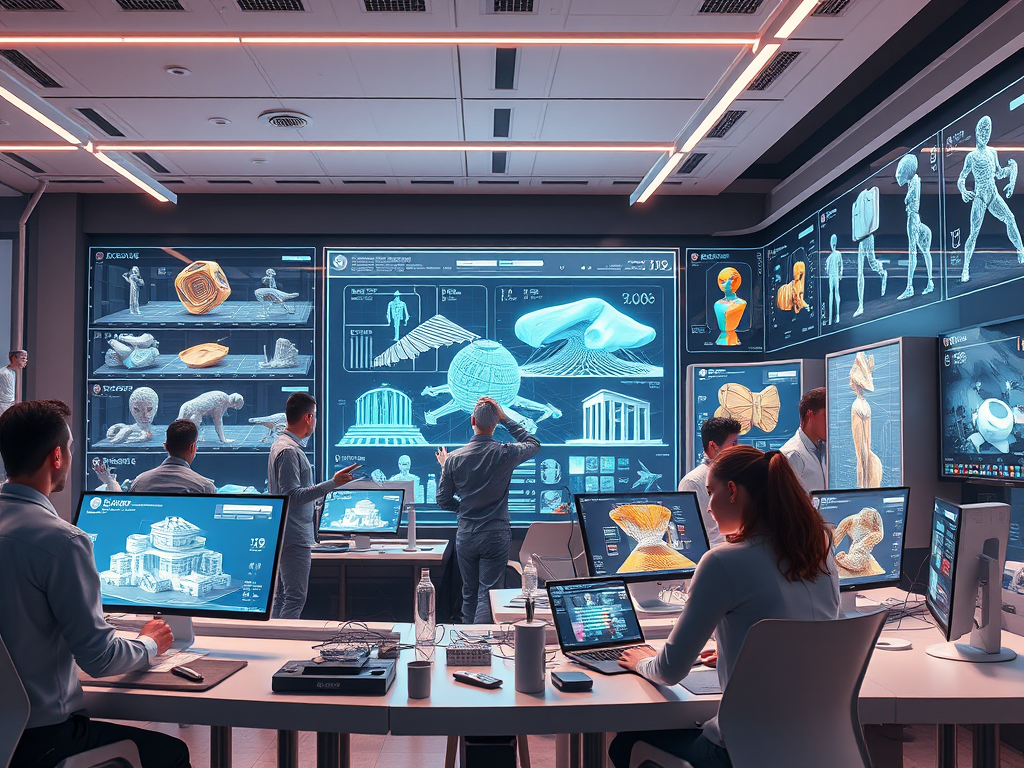
The world of 3D modelling is rapidly evolving, with significant changes in how designs are created, shared, and utilized. Whether you are a 3D artist, visualization designer, game developer, or involved in architecture or interior design, staying informed about these trends will help you stay ahead in the industry. Here are the top trends currently dominating the global market:
1. AI-Driven Automation & Generative Tools
AI has moved beyond being just a buzzword; it is now transforming workflows. Various tools and platforms can generate foundational models, suggest optimizations, resolve mesh issues, propose textures and materials, and in some cases, even produce ready-to-use assets from sketches, image prompts, or text descriptions.
Why it matters: You save a lot of time on repetitive or tedious parts of modeling. More importantly, you get a chance to focus on creativity, detailing, style — things that differentiate your work. If you integrate AI tools into your pipeline, you can produce more assets faster, maintain higher quality, and take on more projects without burning out.
2. Real-Time Rendering & Instant Visual Feedback
The demand for real-time rendering is rapidly increasing. Due to advancements in GPU performance, algorithms, and integration with engines like Unreal and Unity (along with updates to rendering plugins), designers can now see changes immediately.
Applications: Architecture walkthroughs, virtual showrooms, product previews are becoming interactive. Clients expect to see renders earlier in the process, make choices faster. If you adjust your workflow so that you render earlier and often, you’ll meet market expectations and deliver labs that feel more polished sooner.
3. Cloud Collaboration & Distributed Workflows
Remote work has been around for a while, but the sophistication of collaborative real-time tools is a recent development. These tools, which include modelling software, version control, and cloud-based asset libraries, enable teams or individual artists to collaborate from different locations. They can seamlessly share scenes, provide feedback, and exchange components without delays.
Benefits for you: Less duplication, fewer coordination errors, easier asset reuse. If you save your project parts (textures, plants, furniture models) in shared cloud libraries, you can scale faster. Also helps when working with clients or teams in different locations.
4. Focus on Realistic Texturing & Material Scanning
Photorealism is still very much in demand. There is growing use of scanning real-world materials (stone, wood, concrete, etc.), creating better PBR textures, using high-res displacement maps. This helps models look believable in closeups or for high-end renders.
Use in your work: When you build 3D plant models or decorative pieces, ensure the textures are high quality, let imperfections show (wear, variation), and that your lighting complements them. Use realistic bump/normal/displacement and let materials drive a lot of the “real-look”.
5. Low-Poly, Stylized & Sustainable Models
There is a strong demand for photorealism, but there is also an increasing interest in stylized or low-poly models, particularly for games, mobile applications, augmented reality, and stylized interior renders. Additionally, sustainability is becoming more valued, emphasizing the importance of minimizing resource use through lighter assets and efficient rendering.
Why it helps: These lighter models load faster, render quicker, are cheaper to produce, and can sell well to developers/games or for interactive use. Also less stress on hardware — both yours and your client’s. For many scopes, stylization or low-poly is sufficient and attractive.
📊 Market Growth, Pricing, & Software Trends
- The 3D modeling software market is expanding rapidly with strong CAGR projections.
- More providers are integrating AI features into their tools (automation, error detection, texture tools) to differentiate.
- Licensing models shifting: subscription and cloud-based access growing, more emphasis on lower entry cost or scalable pricing for smaller businesses and creators.
Bringing Imagination to Life in 3D
Info
© 2025
Designed with WooCommerce
 Art Azi Designs
Leave a comment